
How 10 Midcentury Modern Furniture Designs Became Icons
These pieces reflect the designers and ideas that made the movement an enduring style

Emerging in the years after World War II, midcentury modern furniture drew on the structural forms of Bauhaus. It softened them through both American postwar optimism and the humanist craftsmanship of Danish modernism. One strain of the movement was defined by clean lines, industrial materials, and forms suited to mass production. At the same time, Scandinavian designers brought a warmer emphasis on natural materials, handwork, and organic forms. Together, those impulses made these pieces feel both timeless and novel. Perhaps this is why these designs have worked effortlessly in interiors from the midcentury modern living room through today, and remain in demand.
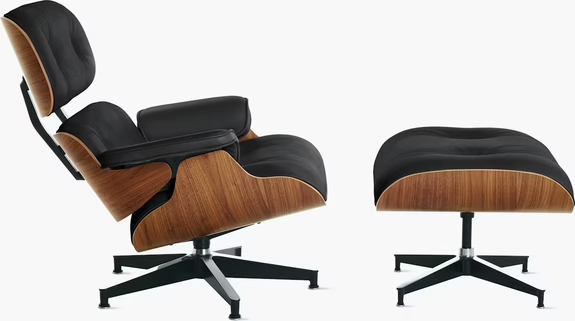
1. The Eames Lounge Chair & Ottoman (1956)
Few objects occupy quite the same place in design history as the “Eames Lounge Chair and Ottoman”: museum-worthy yet widely lived with, endlessly imitated yet still aspirational. Designed by Charles and Ray Eames for Herman Miller, it offered a luxurious rejoinder to modernism’s austerity and helped define the look of postwar American interiors. It was also the influential husband-and-wife duo’s first design for the high-end market.
Inspired by the English club chair, the Lounge Chair and Ottoman were conceived as something softer and more indulgent than the period’s harder-edged modernism. Hand-assembled from three molded wood shells composed of five thin layers of plywood veneered in Brazilian rosewood, the chair was paired with leather cushions Charles Eames famously likened to a “well-used first baseman’s mitt.” That balance of engineering and ease helped make it an instant classic. Since the 1990s, the plywood has been expanded to seven layers, with finishes now including walnut, cherry, and sustainably sourced alternatives.
Part of the chair’s myth lies in what it came to signify. It has long appeared in the imagined interiors of intellectuals, psychiatrists, architects, and aesthetes, those who understand comfort need not occur at the expense of taste. Its place in the Museum of Modern Art’s collection only cemented that status. Collectors continue to prize early Brazilian rosewood examples, with a rare first-generation Eames Lounge and Ottoman realizing $15,000 at Wright in 2022.
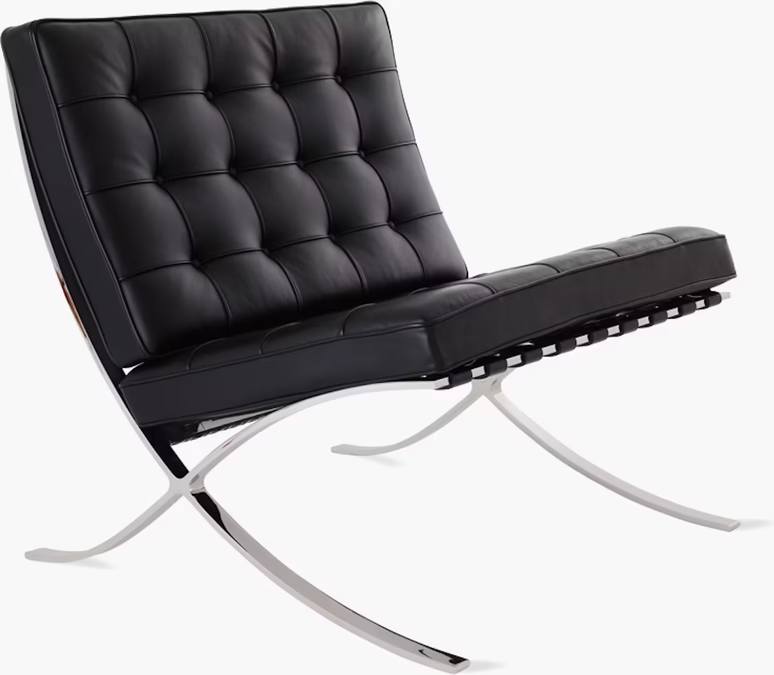
2. Barcelona Chair (1929)
The “Barcelona Chair” has the rare distinction of looking as radical now as it did nearly a century ago. Designed by Ludwig Mies van der Rohe in collaboration with Lilly Reich for the German Pavilion at the 1929 International Exposition in Barcelona, it was conceived as a modern throne for Spanish royalty attending the opening ceremony. Produced by Knoll, the chair remains an exemplar in disciplined luxury, its hand-welted cushions formed from 40 leather panels resting on a crisscrossed polished steel frame.
Its severe elegance has long made it shorthand for a particular kind of power, which may explain its recurring appearances in the homes of well-heeled villains and complicated antiheroes, such as Patrick Bateman in American Psycho and Edward Cullen’s pristine modernist interiors in Twilight. Vintage Knoll examples continue to perform steadily at auction, while rarer early versions command far stronger results. An early “Barcelona Chair,” circa 1935 to 1955, sold for $44,800 at Wright in 2023.
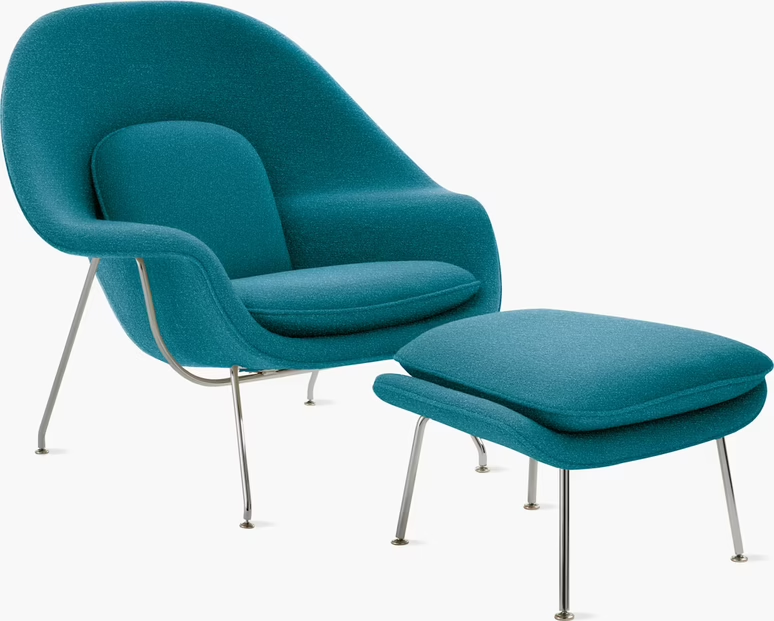
3. The Womb Chair (1948)
At a moment when modernism often prized rigor over comfort, the “Womb Chair” made softness feel radical. Designed by Eero Saarinen, it was Florence Knoll’s response to the conventional lounge chairs of the 1940s, which asked the sitter to remain upright, with hands at the sides and back straight. Knoll famously told Saarinen she wanted a chair, “I can sit sideways in or any other way I want.”
Determined it should be made from fiberglass and resin, the pair worked with a New Jersey shipbuilder to develop a prototype. Its cup-like form was refined with molded foam over the shell, removable cushions, and, after much experimentation, a cone-shaped slipcover. The result felt unlike anything else on the market and quickly became an icon. Over the last 75 years, the chair has remained firmly lodged in the design imagination. More recently, it has enjoyed a fresh afterlife as the TWA Hotel, where all 512 guest rooms contain “Womb Chairs.” For a chair conceived as a “basket full of pillows,” it has proven remarkably serious in the market. Early examples continue to perform strongly, with a circa-1950 “Womb Chair” bringing $17,920 at Wright in 2020.
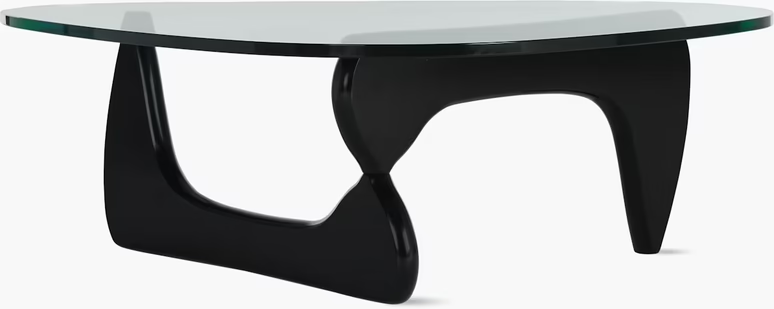
4. Noguchi Coffee Table (1947)
Isamu Noguchi’s “Coffee Table” turned a utilitarian object into a sculpture. Produced by Herman Miller, it pairs two interlocking wood supports with a heavy glass top, creating a form that feels at once grounded and weightless. Often described as biomorphic, the table evokes the natural world through the juxtaposition between solid wood, available in walnut, birch, and cherry, and a translucent glass plane that appears almost to float above it.
Its organic form has helped it feel both firmly midcentury modern and oddly timeless, integrating as effortlessly into contemporary interiors as it did postwar ones. Collectors have long treated the table as artwork as much as furniture, particularly in its rarest early forms. That helps explain why a rare early “Noguchi Coffee Table” realized $444,500 at Wright in 2025.
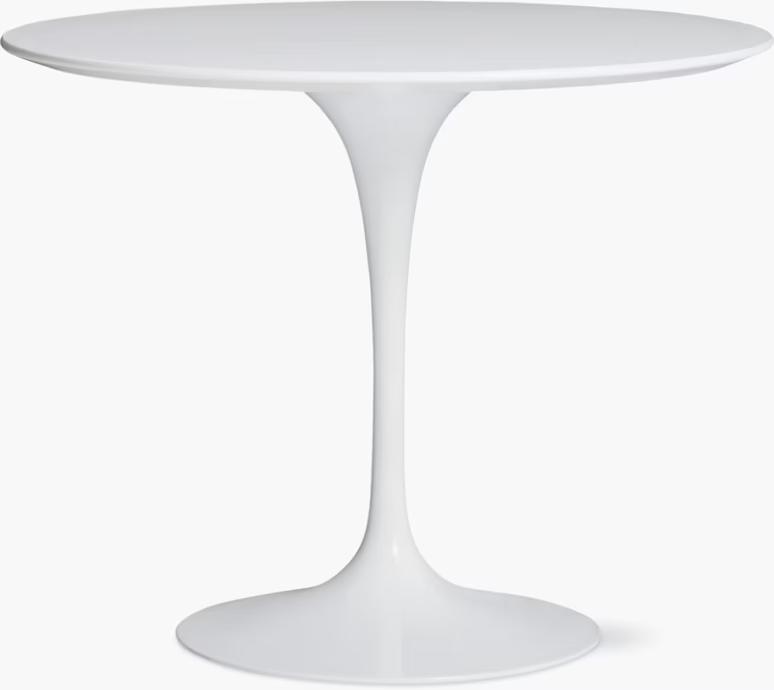
5. Tulip Table (1956)
Eero Saarinen designed the “Tulip Table” to solve what he saw as a mess. His famous dislike of the “slum of legs” beneath traditional tables led to one of midcentury modern design’s most enduring forms. Produced by Knoll, the “Tulip Table” is known for its single-molded cast-aluminum pedestal base and beveled top in marble or wood veneer.
By reducing the table to a single stem-like support, Saarinen made an everyday object feel unexpectedly futuristic while also opening up the dining room visually and physically. That mix of sculpture and utilitarianism helped secure its place in the modernist canon. Its sleek silhouette feels newly at home in today’s retro-futurist revival, a sensibility that has helped return Saarinen’s pedestal forms to the cultural conversation. Early examples remain highly sought after, with a rare early “Tulip Dining Table” realizing $32,500 at Wright in 2024.
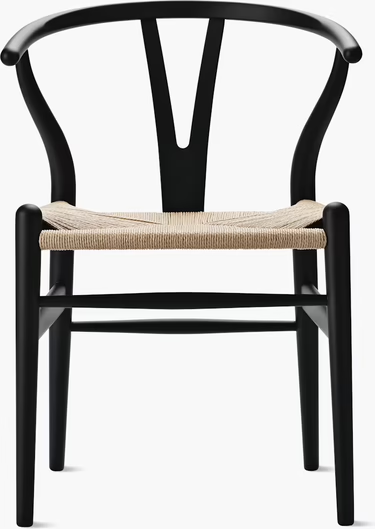
6. Wishbone Chair (CH24) (1949)
A keystone of Danish modern design combining craftsmanship with minimalist form, the “Wishbone Chair” by Hans Wegner for Carl Hansen & Søn is often the chair many picture when they imagine midcentury design. Deceptively simple in appearance, it is noted for its handwoven seat and Y-shaped backrest, requiring more than 100 production steps, many still done by hand. Its spareness brings air and negative space into a room, allowing both the chair and the interiors around it to breathe.
Inspired in part by Ming dynasty seating, Wegner gave the chair a casual elegance. Early examples continue to reward collectors, with a set of six vintage “CH24 Wishbone Chairs” realizing $9,450 at Wright in 2024.
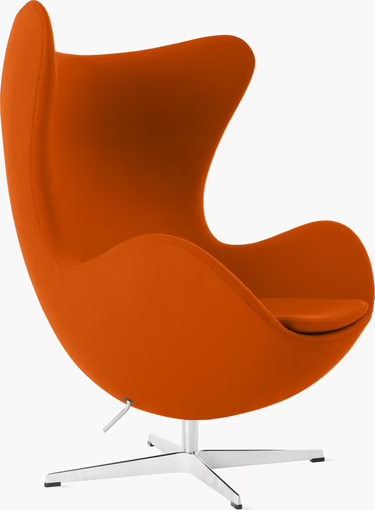
7. Egg Chair (1958)
Originally conceived for a hotel lobby, the “Egg Chair” quickly transcended contract furniture. Inspired by Eero Saarinen’s “Womb Chair,” the “Egg Chair” was designed by Arne Jacobsen for the SAS Royal Hotel in Copenhagen. Its enveloping, high-backed form was intended to offer privacy within a public space, turning a lounge chair into a sculptural refuge.
The chair appealed not only for its sophisticated form but also for offering an often-forgotten luxury in urban life: respite and contemplation. Its cocooning shape softened the harder geometry of modernism. Early examples continue to fetch high prices, with a vintage “Egg Chair” realizing $22,400 at Wright in 2023.
8. Bertoia Diamond Chair (1952)
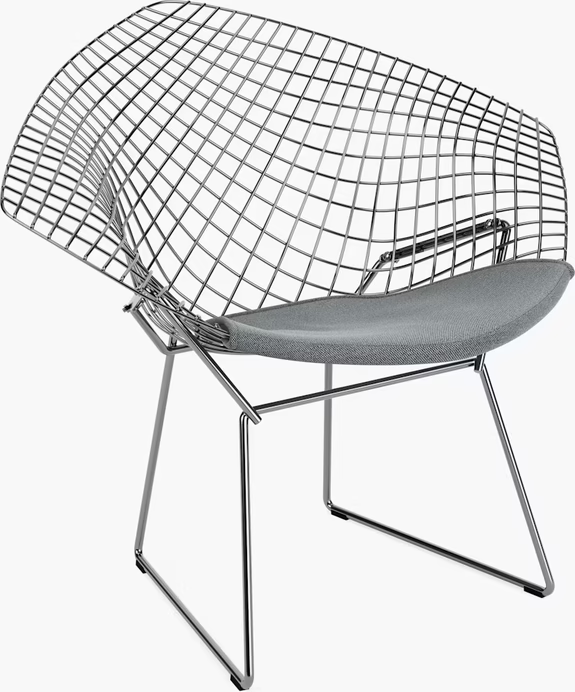
Harry Bertoia turned welded steel into something that looked almost weightless. Designed for Knoll in 1952, the “Diamond Chair” transformed industrial wire into a sculptural seat that appeared airy, geometric, and unexpectedly sensual. Bertoia famously said his chairs were made up “mainly of air,” an apt description for a design that seems to occupy space without weighing it down.
Its open lattice form gave modern furniture a sense of permeability, permitting light to pass through. By making negative space part of the object itself, the chair made rooms feel less crowded. There was something quietly radical in that. More than most chairs of the period, the “Diamond Chair” made industrial materials feel almost playful. Early examples continue to perform strongly, with a vintage “Diamond Chair” realizing $18,750 at Wright in 2024.
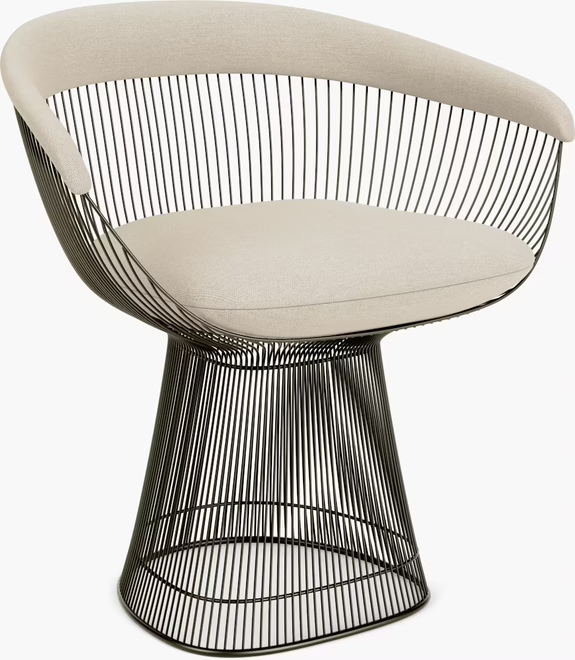
9. Platner Armchair (1966)
Working with an unconventional idea, Warren Platner set out to channel the sophistication of Louis XV furniture while stripping away the opulence that could make those pieces feel bulky and stifling for Knoll. The result was an armchair composed of hundreds of bent steel rods that rise to envelop the sitter. What could have felt ornamental instead feels unexpectedly light, almost shimmering, the wire base creating a moiré effect that seems to shift as you move around it. In that sense, the “Platner Armchair” made decoration feel modern again.
The market has continued to reward that tension between glamour and restraint. Early examples remain sought after, with a vintage “Platner Armchair” realizing $8,960 at Wright in 2023.
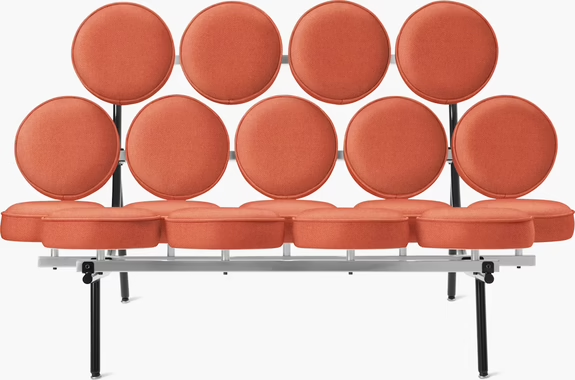
10. Marshmallow Sofa (1956)
The “Marshmallow Sofa,” designed by Irving Harper for Herman Miller, proves design doesn’t have to be so serious. Composed of a steel frame and 18 round upholstered discs often likened to marshmallows, the piece delivered a sense of wit to modernism at a moment when much of it could feel severe. It reportedly began after a plastics salesman pitched the discs as an inexpensive industrial component, though that promise quickly unraveled. Covering each pad individually proved costly, making what was conceived as an affordable innovation into an unlikely luxury item.
Produced in a run of just 186 examples, the “Marshmallow Sofa” has become one of the most coveted works of American postwar design, with examples routinely bringing $15,000 or more, while a rare 103-inch version sold at Sotheby’s in 2000 for $37,500.
Most of these designs remain in continuous production, often reissued in renewable materials and updated finishes that keep them relevant to contemporary interiors. For collectors drawn to vintage examples, authenticity lies in the details. Enthusiasts should inspect items for original manufacturer labels or stamps, period-appropriate materials and hardware, or documented provenance.
Note: thanks to their enduring popularity, all of the timeless furnishings mentioned in this story are available for purchase from Design Within Reach.