
What to Look for at Frieze New York 2026
In its 15th edition, the contemporary art fair returns to The Shed from May 13–17, this year with a special focus on Latin American artists and galleries

As the city shakes off its winter coats and slips into something lighter, the art world descends upon Manhattan with a particular kind of electricity for Art Week. Bringing together a host of fairs, including Frieze, TEFAF, NADA, and Independent, the busy week of events attracts collectors and enthusiasts alike. This year, Frieze returns as a fixture of the cultural calendar and as a barometer of where contemporary art—and its ever-evolving audience—finds itself now.
From May 13—17, the sleek halls of The Shed in Hudson Yards will be filled with a labyrinth of carefully curated booths from over 65 international galleries. The event convenes emerging artists alongside blue-chip names, creating a refreshing dialogue that is a true reflection of the art market today.
Now in its 15th edition, Frieze is looking south to Latin America, bringing a strong selection of galleries and artists from the region. With guidance from two new committee members, Fátima González of Campeche and Omayra Alvarado of Instituto de Visión, the Latin emphasis reflects Frieze’s increasingly global influence. Among the galleries from Latin America are the Mexico City-based OMR; Kurimanzutto, which is located both in Mexico City and New York; and a host of Brazilian dealers, including Fortes D’Aloia & Gabriel, A Gentil Carioca, and Mitre Galeria.
For collectors, the diverse perspectives fairs like Frieze can offer provide a unique opportunity to see a wealth of art in a short period of time. “You can move between works of another era and contemporary voices in just a few steps,” collector and artist Harmonia Rosales shares with Galerie. “As both an artist and a collector, that kind of proximity feels energizing and inspiring. It really shows how connected our visual histories are.”
Below, find Galerie’s top highlights to look out for at Frieze New York 2026:
Contemporary African and Diasporic Art Gets a New York Home
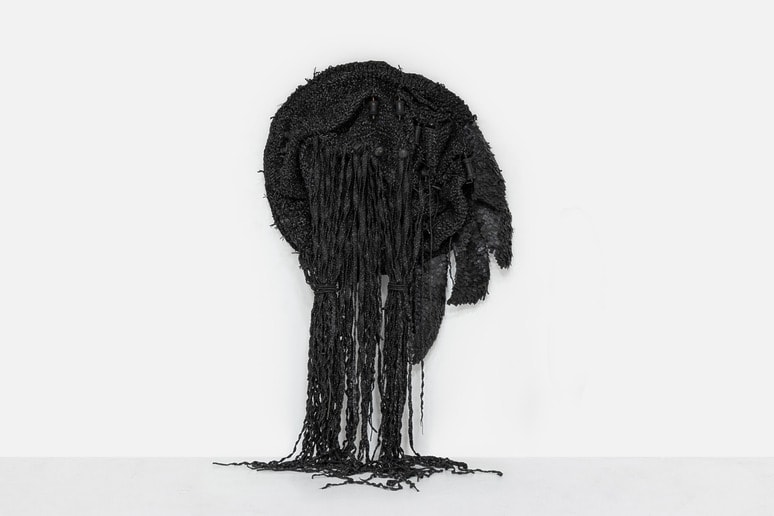
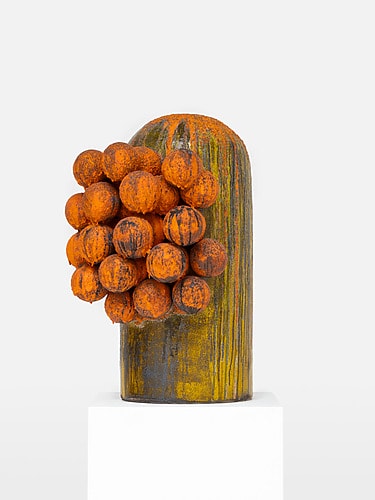
After years of building a reputation for championing artists from Africa and the diaspora with its Cape Town-based gallery, Southern Guild has landed in New York, adding a Tribeca space to its portfolio. With this expansion, the gallery bridges South Africa and the U.S., bringing with it a roster of artists ranging from painters and ceramicists to fiber and performance artists.
For Frieze, Southern Guild is giving visitors a glimpse of what’s to come in its new space. “We’ve always seen Frieze New York as an energizing conversation, and to participate this year as a gallery with a new home in Tribeca feels especially meaningful,” says Trevyn McGowan, who founded Southern Guild alongside her husband, Julian. “Opening our New York space has given the moment real resonance. I’m excited to present artists who each carry a singular force: Zanele Muholi’s extraordinary presence, Zizipho Poswa’s sculptural power, Roméo Mivekannin’s sharp re-readings of history, Mmangaliso Nzuza’s emotional depth, and Patrick Bongoy’s raw material intelligence.”
Cyborg Sculptures
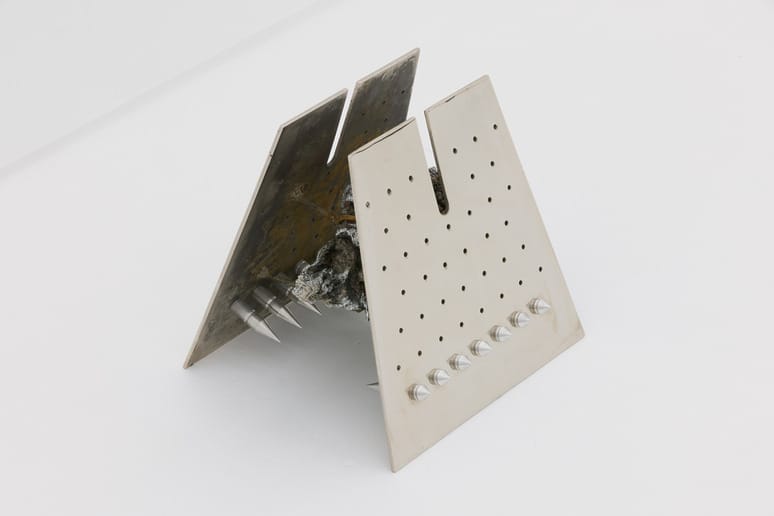
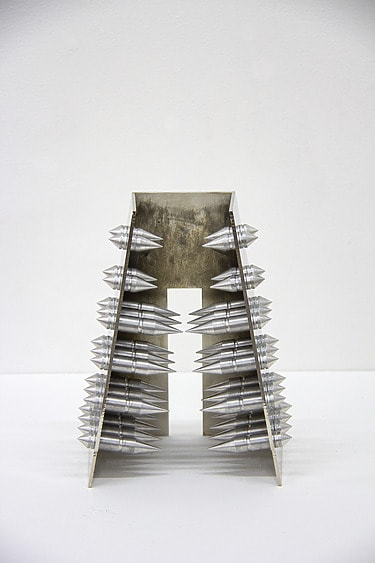
In the Focus section of subsidized solo booths for emerging galleries, hybrid metal sculptures that vaguely resemble objects like a studded cheese grater will take over Sargent’s Daughters’s booth. Made by Yeni Mao, a sculptor whose practice feels both industrial and intimately corporeal, the nickel-plated steel armatures hold objects the artist either found or meticulously cast. The presentation teases an upcoming solo show of Mao’s work at Museo Anahuacalli in Mexico City, opening later this year.
“The relationship between the machine and man has never been more terrifyingly close than in our current time,” says Allegra LaViola, the gallery’s founder and director. “Yeni Mao’s handmade works that read like cyborgs force a literal confrontation as we are reflected in the works themselves, yet repelled by their sharp spikes and low vantage point. They make us serve them, and the surrender is part of the process. It’s exciting to have to labor on behalf of the work instead of just milling blindly past.”


A Stunning Display of Joe Bradley
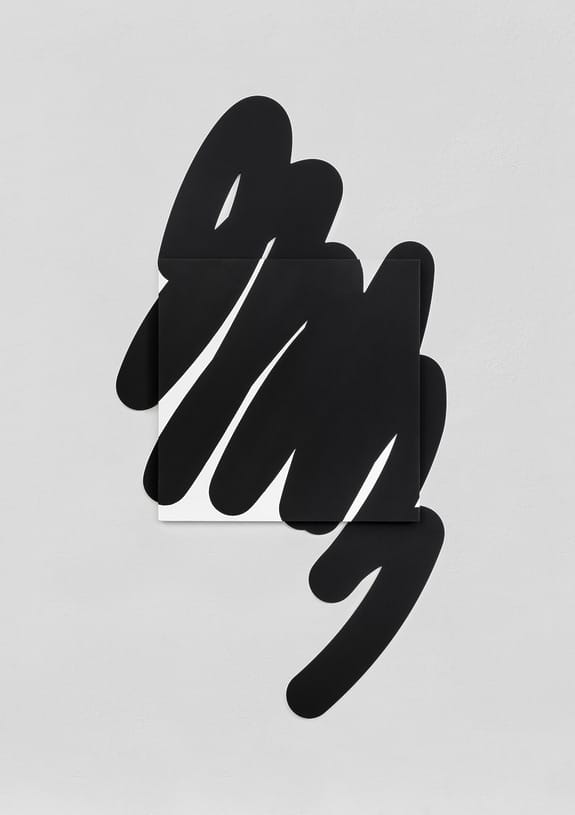
In a solo booth of new paintings and works on paper by Joe Bradley, David Zwirner is showcasing the artist’s raw, yet deliberate approach to abstraction that has captivated for decades. Emerging into the New York scene at the turn of the century at a time of great experimentation in art, Bradley has become a leading artist, balancing spontaneity and deeply considered abstraction while also merging crude forms with references to modernist traditions. Bradley’s canvases—ranging from sparse to chaotic—challenge the boundaries between figuration and abstraction, inviting viewers to find meaning in ambiguity.
David Zwirner’s booth will include a stunning new painting called Mayday (2026), a layered, jumbled array of geometric shapes in rich hues and energetic marks characteristic of the artist’s lauded style.
Hidden Roots Made Visible
Among the cohort of Brazilian galleries exhibiting at Frieze, Vermelho is showing a range of artists on its robust roster, including Iván Argote, Ximena Garrido-Lecca, and Carlos Motta.
A highlight of the presentation will be a stunning piece by Tania Candiani. Using stark raw canvas, the artist sews black cotton thread to create intricate imagery that resembles line drawings. The piece is from the artist’s Root Systems series, which gives a visual form to the intricate network sustaining life underground. Candiani’s complex architecture of roots highlights both the beauty and the fragility of the natural world.
Southeast Asian Artists Shine
In a booth shared with G Gallery, the Singapore-based Yeo Workshop is showcasing three Southeast Asian artists: Citra Sasmita, Maryanto, and Noor Mahnun (Anum). One of the many curated presentations that Frieze has become known for, the artworks on view explore themes of identity, memory, and the impact of colonialism across generations.
A highlight will be Sasmita’s The Weaver of Myth (2026), a painting with beads, pearls, and fabric woven into the surface. The self-taught artist investigates Balinese iconography and myths, reimagining traditional imagery to subvert the male gaze and patriarchal systems depicted. Taking as a starting point the 15th-century tradition of Kamasan painting in which women were sexualized and viewed as evil, Sasmita challenges the gender hierarchy and depicts strong, powerful women. Her works for Frieze are mounted on textile as a nod to the use of fabric in Bali to communicate during colonial trade wars.
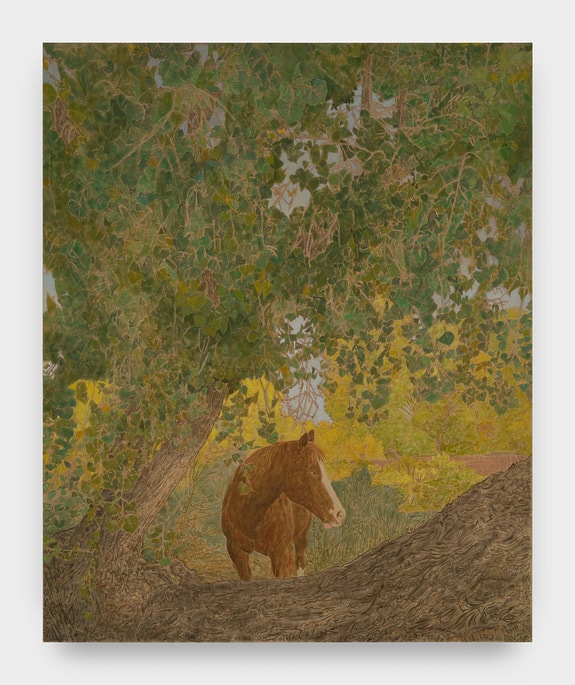
Hayley Barker’s Atmospheric Landscapes
In layered, atmospheric paintings, Hayley Barker is bringing the landscapes of the American Southwest to New York. Using small brushes to meticulously fill her large canvases, Barker creates airy, luminous compositions. Her foray into the American Southwest is a departure from her typical focus on California and was inspired by a trip she took to the high desert of Abiquiú, New Mexico. While there she spent time doing equine therapy, which in part inspired this new body of work.
Horses are the subject of new works on view, including Stella (2026). “Hayley’s new paintings are all exceptional but I’m especially excited to present Stella (2026),” says Davida Nemeroff, owner of Night Gallery. “There’s a profound care and reverence in her brushwork—each leaf and strand of hair is rendered with tender precision. Hayley is deeply spiritual, attuned to the rhythms of the earth and the life around her. They vibrate through her paintings, each one more beautiful than the last. This will be an exciting moment for both Hayley and Frieze New York, as these paintings will carry us to another time and place.”
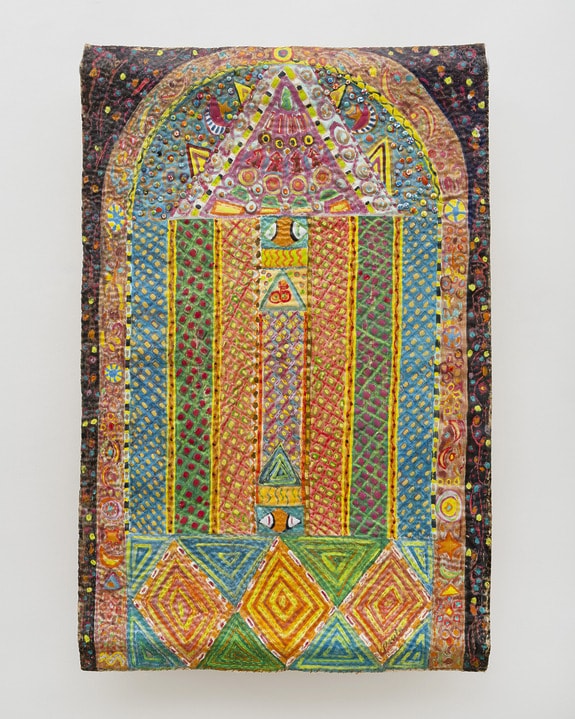
Pacita Abad’s Noteworthy Door to Life Series
Coinciding with Pacita Abad’s exhibition Door to Life, on view at the Chelsea gallery through June 20, Tina Kim is bringing a stellar example from the storied artist’s series of the same name to Frieze. Known for her deep engagement with politics and for pushing the boundaries of craft, Abad traveled widely in her lifetime. Drawing inspiration from artisans and craftspeople in the places she traveled, she developed a uniquely international, intercultural practice. Referencing the colorful doors and stained-glass windows of the pre-Islamic city of Sanaa where Abad traveled in 1998, the series features bright colors and architectural shapes.