
In a Stunning New Exhibition, Nancy Gabriel and Julie Hillman Reimagine the Art of Collecting
Staged within a soaring penthouse during New York’s busiest week for art and design, a dazzling showcase at Galerie Gabriel pairs Jean Royère masterworks, Aboriginal paintings, and provocative contemporary pieces to explore collecting as an act of cultural transmission

“What really is collecting?” gallerist Nancy Gabriel asks during a walkthrough of “The Cultivated Eye,” a newly opened exhibition staged within her dazzling duplex penthouse atop Sutton Tower on Manhattan’s Upper East Side. The question arrives at a fitting moment, as Frieze, TEFAF, and NYCxDesign all recently coincided to transform New York into a magnet for collectors, curators, and discerning aesthetes from around the globe. With curation by interior designer Julie Hillman, the exhibition examines collecting through the lens of lived experience and connoisseurship, positing that inheritance extends beyond the object itself to encompass the ability to recognize nuance, craftsmanship, and cultural heft. “The cultivated eye forms over time through patience, intellectual curiosity, and lived experience,” Gabriel explains. “There’s a custodian role in being a collector.”
Gabriel’s philosophy permeates the penthouse, which Hillman outfitted with an assured mix of rare furnishings, contemporary art, and historically significant pieces against the sweeping views of the Manhattan skyline and East River. The curation reflects Hillman’s deft hand for layered interiors while reinforcing Gabriel’s belief that collecting functions as an act of transmission rooted in stewardship and continuity. “The idea was to create the environment of a true collector,” says Hillman, who makes her curatorial debut here. “In these kinds of New York apartments, you often expect flashy pieces. I wanted to give the apartment a soul. I wanted excellent art, but not pieces everyone knows. I wanted discovery and intellectual exploration.”
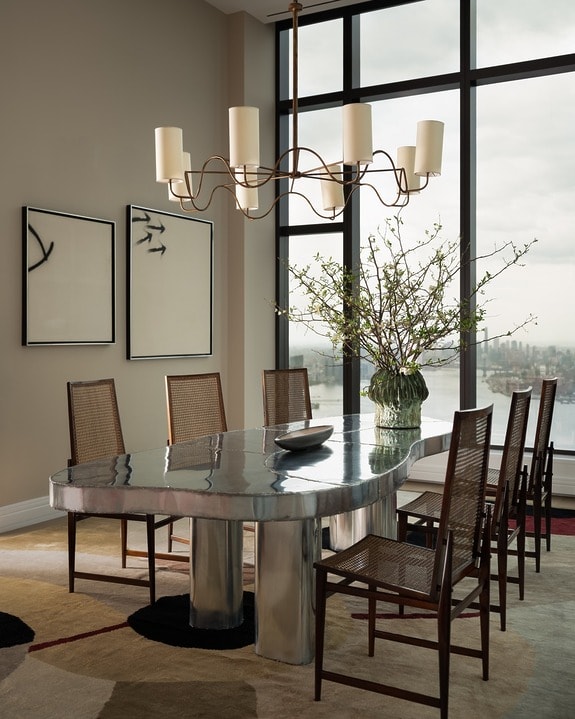
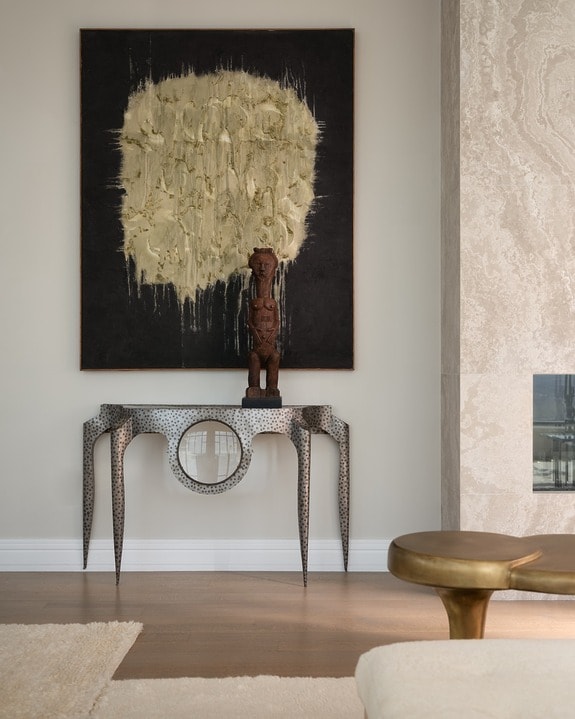
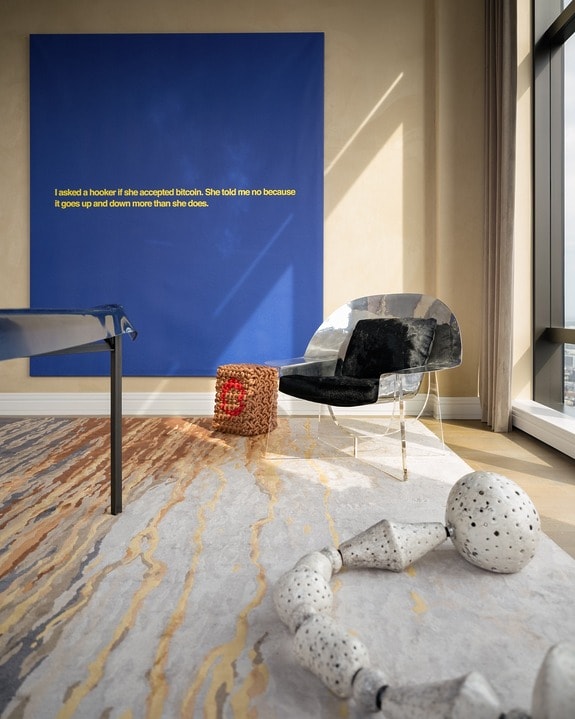
New discoveries indeed emerge at nearly every turn. Just beyond the elevator, Hillman and Gabriel installed a resin console by Marie-Claude de Fouquières whose smoky surface bears metallic casts of the artist’s own fingers. An upstairs office pairs an ultra-rare Philippe Starck table capped with luminous blue Murano glass that drapes like a cloth with an exaggerated black lacquered Fratina chair by Mario Ceroli. In the living room, Jean Royère furnishings from Gabriel’s collection mingle with more provocative works, including a cluster of speckled ceramic tables by Agnès Debizet that gather into a sprawling cocktail table, and the feral Barbare Chair by Elizabeth Garouste and Mattia Bonetti, whose imposing silhouette evokes a primitive throne.
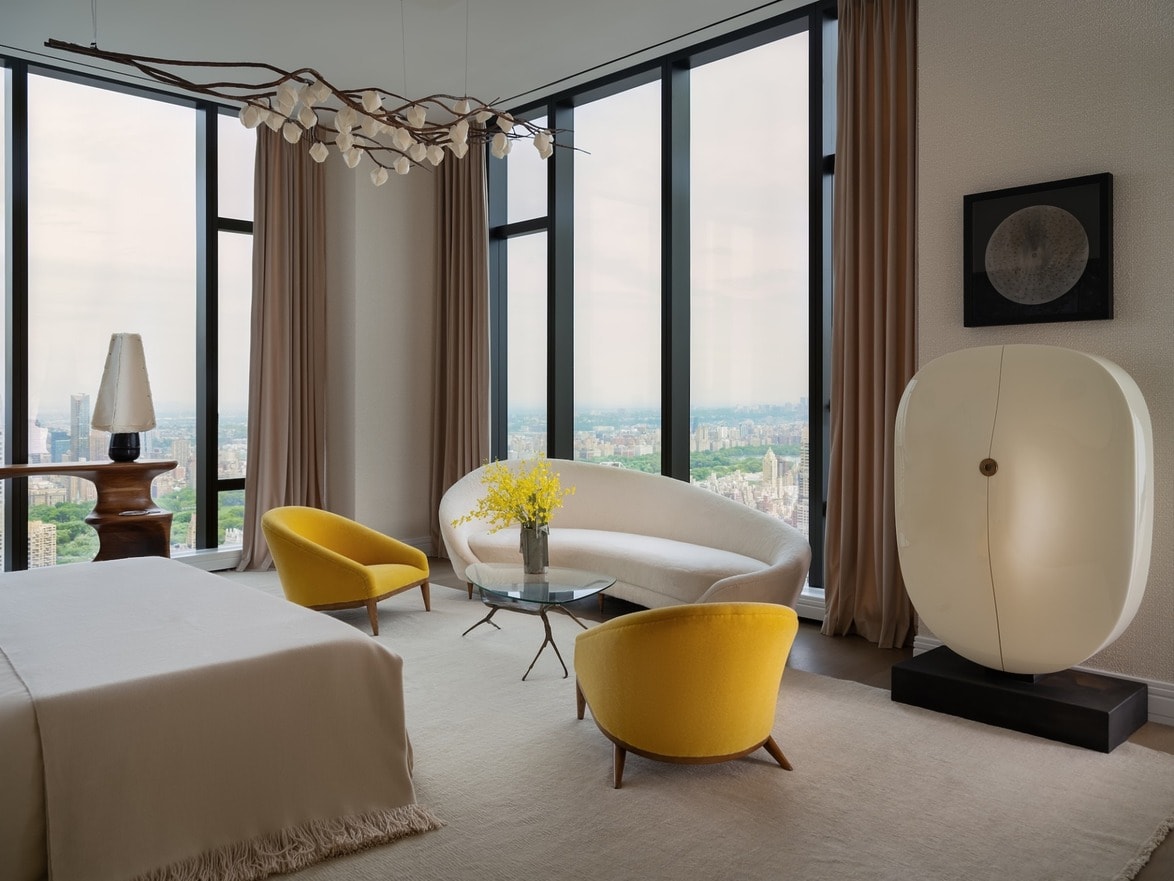
A monumental patchwork carpet assembled from multiple Nordic Knots rugs stretches across the living room beneath many of the show’s most important works, including a 15-foot-long bespoke tête-à-tête sofa. Hillman describes rugs as “the canvas of a room”—a philosophy that fueled her effort to unify the soaring space rather than divide it into smaller conversational pockets. The gesture reinforces one of the show’s central ideas: these works were conceived for domestic life rather than museum display, and their character deepens considerably when placed within inhabited interiors.
Hillman balanced the furniture’s more dramatic silhouettes with an art program that favors subtle discoveries over instantly recognizable trophies. Works by Daniel Buren, Sterling Ruby, Martin Barré, Louis Eisner, and Nadia Lee Cohen appear throughout the penthouse with an almost studied ease. “Many times in New York, you walk into these apartments and immediately recognize the artwork,” Hillman says. “Here, I wanted people to explore. Your eye doesn’t settle in one spot.” Much of the art came through Creative Art Partners, including works curated by Hillman’s daughter, Paige Israel, who assembled a selection of expressive abstractions and narrative-driven works that deepen the apartment’s layered atmosphere. One particularly enigmatic canvas came from Hillman’s own collection. Purchased by her husband years ago, the text-based work bears an uncanny resemblance to Richard Prince and carries the name Fulton Ryder, an elusive figure whose identity remains something of an art-world mystery after vanishing almost as suddenly as he appeared.
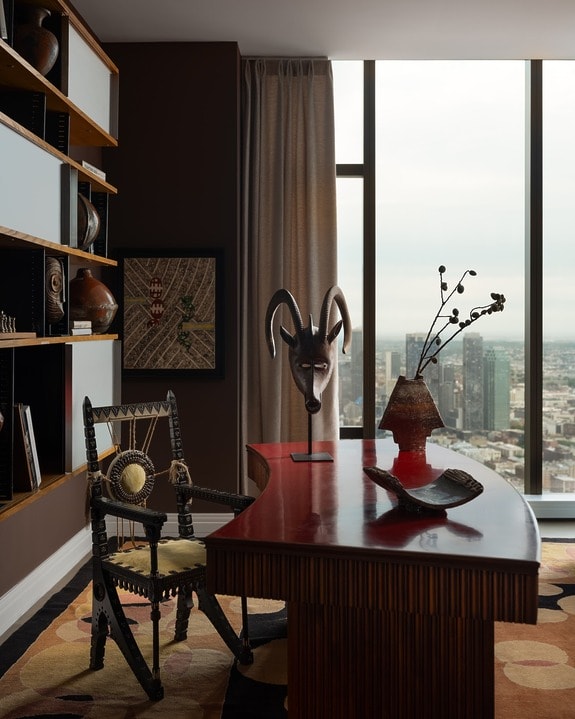
All the artwork pairs handsomely with the formidable roster of furnishings drawn from Gabriel’s own collection, much of which traces a lineage of designers who expanded the vocabulary of modernism across the 20th century. Jacques Adnet’s postwar rigor appears alongside the sculptural curves of Jean Royère, the disciplined silhouettes of Maxime Old, and Philippe Hiquily’s animated metalwork. Together, they establish a historical foundation that gives contemporary works by designers such as Najla El Zein, Max Lamb, and Crina Arghirescu Rogard added depth, allowing newer voices to sit comfortably beside canonical masters without losing their distinct character. “I always make it a point that I want pieces with references to the 20th century,” Gabriel says. “They can feel contemporary while still remaining rooted in the history of decorative art. That continuity is what makes something timeless. It’s not trends.”
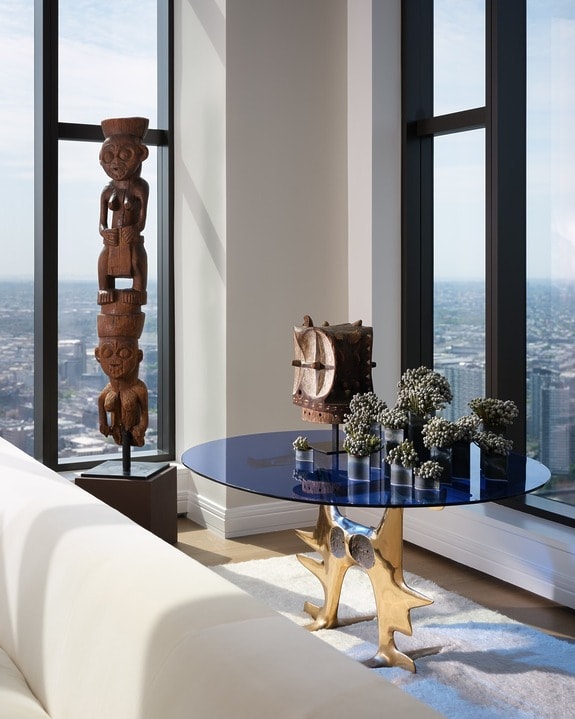
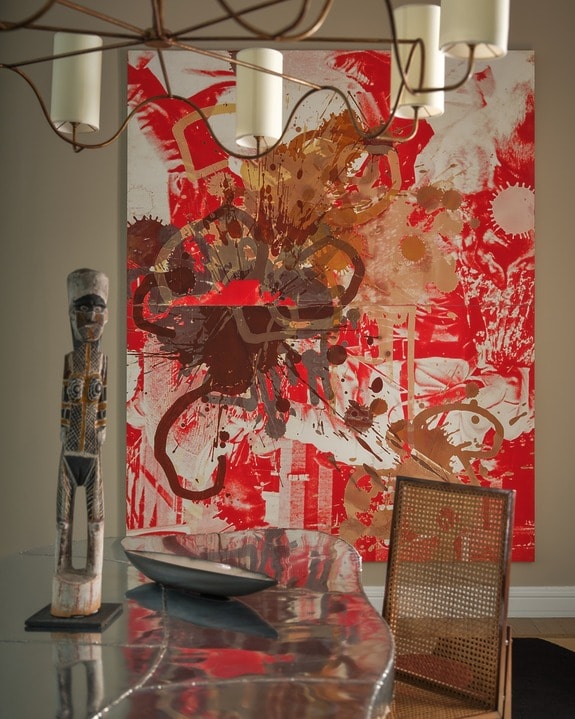
That spirit of exchange extends well beyond Gabriel’s own inventory. She and Hillman tapped an expansive circle of collectors, galleries, and collaborators that includes Dobrinka Salzman, Galerie Gastou, Salon 94, and Dennis Freedman, the longtime creative director and prolific collector whose rare furnishings lend verve to several rooms. After Hillman persuaded him to part with a handful of pieces for the show, Freedman contributed treasures such as Renzo Mongiardino ceramic lamps and a sculptural Pierre Paulin mahogany-and-leather desk with matching chair. Hillman also drew upon her longstanding interest in Aboriginal art, incorporating important loans from D’Lan Galleries and Galerie Lucas Ratton. Along a staircase, exuberant canvases by Sally Gabori, the celebrated Australian painter who began working in abstraction at age 81, fill the stairwell with fiery red, burnt orange, black, and white brushwork.
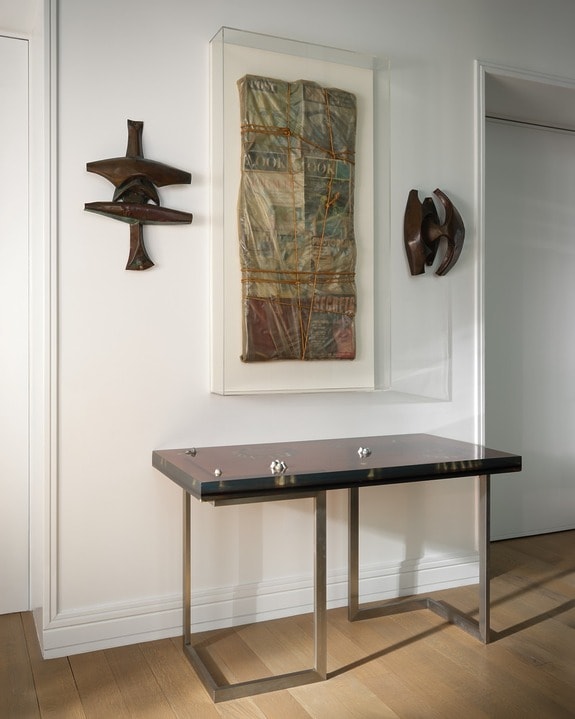
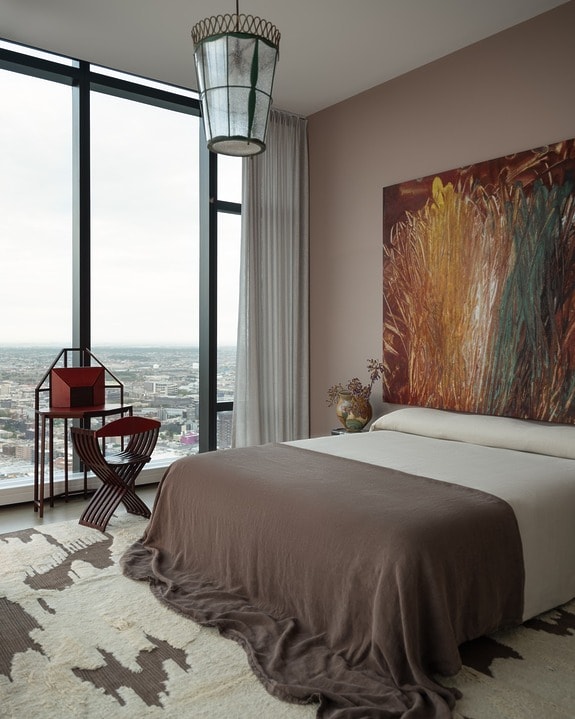
That precise coexistence of past and present courses throughout the penthouse, though both women ground their approach in a more intimate philosophy: art and design reveal their fullest character when folded into daily life. Each object wields the mark of its era, whether through material experimentation, craftsmanship, or the worldview of its maker. “A true collector knows how to take risks and take responsibility for their taste,” Gabriel says. “They know how to make bold moves and flirt with the limit without crossing it. That is how magic happens.” With Hillman, she makes risk and discernment coexist beautifully.
“The Cultivated Eye” will be on view at Galerie Gabriel by appointment only until November 30.