
Dries Van Noten Is Launching a Craft-Focused Foundation in Venice
Set within the fanciful Palazzo Pisani Moretta, Fondazione Dries Van Noten will unite makers across disciplines through a deeply considered program rooted in Venetian heritage and contemporary creative practice

When Dries Van Noten stepped down from his namesake label this past June, he explained that he wanted to shift his “focus to all the things I never had time for” after nearly four decades at the helm. That next chapter now comes into view through Fondazione Dries Van Noten, a cultural nonprofit devoted to craftsmanship set to open this coming April in Venice, Italy.
The initiative grows from a creative life defined by profound engagement with material and technique. Van Noten was born into a family of tailors, trained at Antwerp’s Royal Academy of Fine Arts, and launched his first collection in 1986. His work quickly garnered international attention for a bold creative vocabulary grounded in artisanal skill, establishing him as a central figure among the influential Antwerp Six. His longtime partner, Patrick Vangheluwe, joined the company soon after, and together they have guided every phase of the brand’s evolution, including a sale to conglomerate Puig in 2018. Both remain involved with the label to this day, overseeing its closely watched beauty and perfume lines alongside the design and visual identity of its well-appointed boutiques around the world.

Conceived by Van Noten and Vangheluwe, the Fondazione reflects a shared belief in the cultural force of craftsmanship. The nonprofit will celebrate the human dimension of creation through established and emerging voices across art, fashion, architecture, and related fields. A manifesto penned by the duo situates the forthcoming institution firmly within La Serenissima’s centuries-long lineage of creative ingenuity, which now unfolds through cultural events like Homo Faber, Venice Glass Week, and the Venice Biennale. “Here, centuries of craftsmanship serve as a backdrop for new dialogues: between artworks and artisans, past and present, and local talent and international creativity,” it reads. “The Fondazione envisions Venice not as a static museum, but as a living, evolving hub where ideas circulate as freely as the tides.”
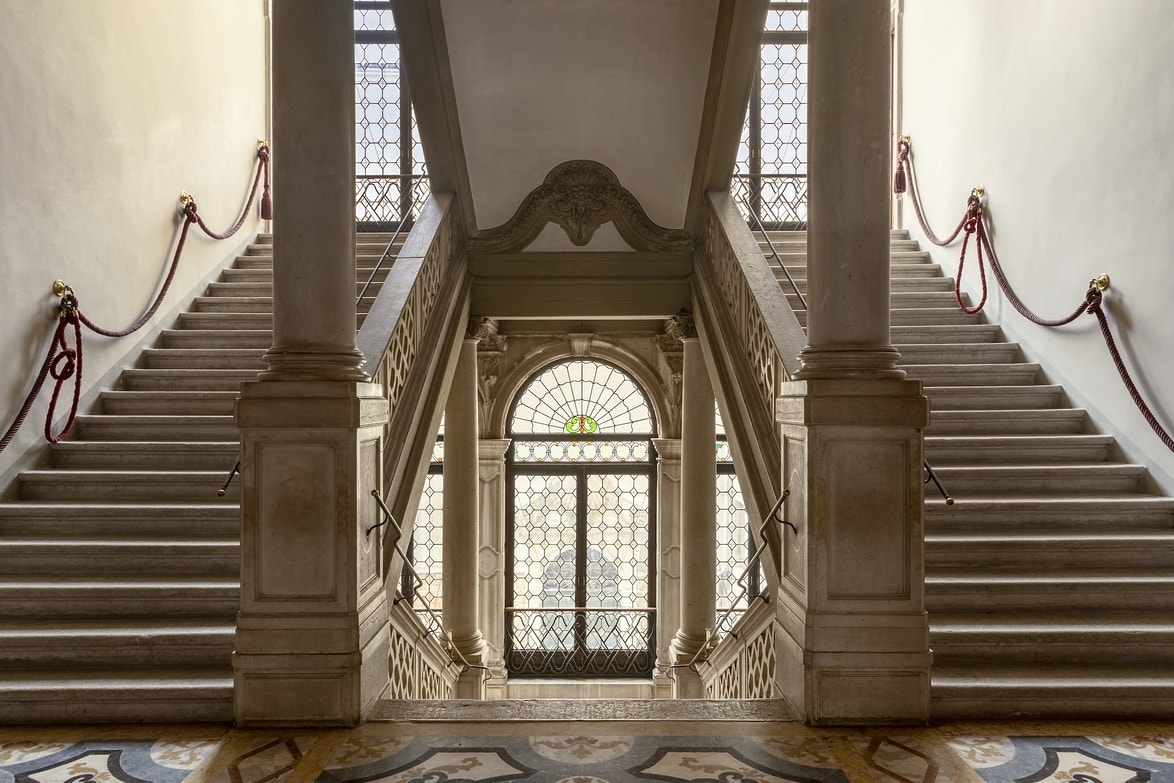
At its core, the institution aims to demonstrate the vital role of artisanal skills in shaping culture by uniting fields through a belief that creative expression grows from gestures, skills, and the imaginative labor that binds individuals to their environments. As a platform for established makers and emerging talents, the Fondazione will commit to sustaining heritage craftsmanship while placing Venetian traditions in active dialogue with international creative practice. Its philosophy draws strength from Venice’s history of creative exchange—a topic intimately familiar to Van Noten after he curated a 2015 Musée des Arts Décoratifs exhibition about his most profound inspirations, encompassing garments by Thierry Mugler, blue-chip works by Damien Hirst and Gerhard Richter, and a wraparound flower installation by Azuma Makoto, among many others.
This vision begins at the exquisite Palazzo Pisani Moretta, the Fondazione’s home base that Van Noten purchased from the Sammartini family in May. Overlooking the Grand Canal between the Rialto Bridge and Ca’ Foscari, the breathtaking property was built in the late 15th century in the Venetian Gothic Fiorito style before being passed to the influential Pisani Moretta family in the early 1600s. Chiara Pisani transformed the interiors between 1735 and 1750 with lavish Rococo decoration. Much of the original character remains, including artworks by Giambattista Tiepolo, Jacopo Guarana, Gaspare Diziani, and Giuseppe Angeli. An upcoming renovation led by architect Alberto Torsello will safeguard the palazzo’s architectural legacy while preparing it for its new cultural role.


The Fondazione will also extend its footprint across Venice with the opening of Studio San Polo in late 2026. The architect Giulia Foscari Widmann Rezzonico, founder of UNA-Unless, will redesign the site to cultivate creative exchange within a minimalist, gallery-like atmosphere that intentionally contrasts the palazzo’s ornamental grandeur. Together, these venues will support a year-round program that includes presentations, collaborative projects, residencies, and educational initiatives for practitioners at various stages of their careers. Students will also gain access to mentorship and hands-on learning, a cornerstone of the Fondazione’s ethos.
Although Van Noten and Vangheluwe have long maintained a residence and a famously otherworldly garden in the countryside outside Antwerp, they describe Venice as a creatively vitalizing place that rewards immersion. “Venice is more than a weekend destination; it’s a city full of life, from its markets to its young residents, with a one-of-a-kind cultural stimulus,” they write—a perspective that also shapes their connection to Palazzo Pisani Moretta. “We fell in love with the palazzo not as a monument frozen in time, but as a stage for creativity.”

Van Noten and Vangheluwe’s plans for the Fondazione reflect that conviction. Though details of initial programming remain undisclosed, the partners envision a platform that uplifts makers of all types as a long-term cultural commitment. “We aim to develop a pulsing venue where artists and artisans can present their work, where students can engage in hands-on exploration, and where visitors experience making as an act of culture,” they said in a statement. “It’s about nurturing an ecosystem that empowers craft, giving it visibility, relevance, and vitality in the age of machines and digital revolution, while connecting the city’s past, present, and future. “Fashion has given us so much, and now we want to give back to support craft.”