
Miami’s Ever-Evolving Design District Shines as Must-See Cultural Destination During Art Week
An array of exhibitions, pop-up installations, and shop activations offered a glimpse of what Craig Robins has planned for the area in years to come

“They’ve really done it,” designer Ernest de la Torre remarked over dinner in Miami Beach, during this year’s early December extravaganza of fairs, exhibitions, activations, performances, talks, and parties. “The architecture, the art, the shops,” he added, “it’s all elevated and really impressive.”
De la Torre was discussing the ever-evolving Miami Design District, unrecognizable from just 15 years ago, thanks to a transformation masterminded by developer Craig Robins and his firm, Dacra. In the quarter-century since the Art Basel fair landed Miami on the global culture cognoscenti’s radar, few have had more impact than Robins in building on that energy and positioning the city as a year-round hub for art, design, and high-end dining and shopping.
An ardent collector and co-founder of the Design Miami fair, Robins began his career doing revitalization projects in South Beach. But his primary focus over the past two decades has been remaking the once-sleepy Design District into “one of Miami’s must-see cultural destinations,” as he describes it.
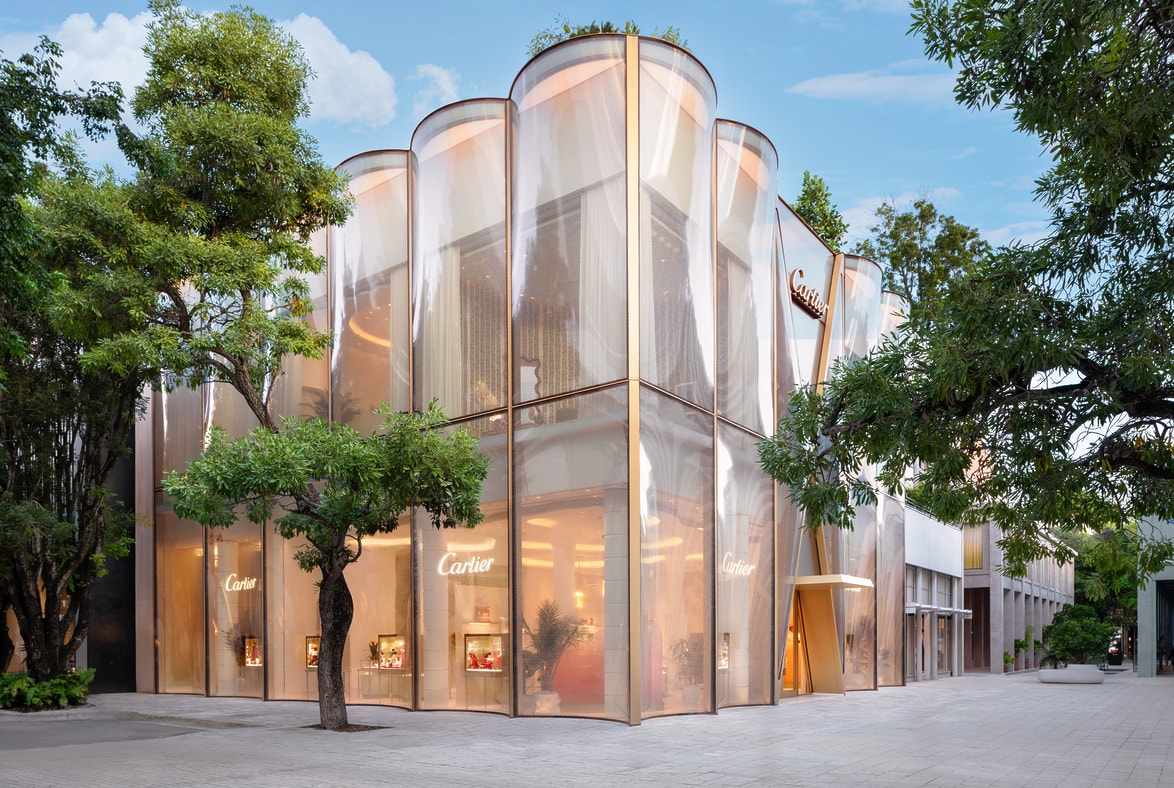
Home furnishings stalwarts now mingle with hip clothing brands, heritage fashion houses, and restaurants helmed by celebrity chefs, while eye-catching architecture animates the neighborhood’s tree-lined streets and courtyards, from art-covered parking garages to distinctive shopfronts by major designers. “What you see today,” Robins says, “is the result of supporting great architecture and public art, supporting local and global talent, and creating a neighborhood where experience comes first.”


The city’s annual art week remains a key moment for the district, “bringing the world’s most influential artists, designers, collectors, brands, and cultural leaders to our doorstep,” says Robins. This year, the Design District offered up an array of exhibitions, pop-up installations, and shop activations, not to mention countless private cocktails and other events. The week kicked off with an opening preview of “Walking on Air,” the latest exhibition drawn from the 1,700-plus artworks Robins has assembled over four decades, arrayed across two floors in Dacra’s offices at the historic 1926 Buick Building.
The collection is an often provocative and playful mix of predominantly figurative works, “driven entirely by Craig’s intuition and personal taste,” noted Karen Grimson, the trove’s curator, during a private walkthrough. The current show features multiple works by some of the artists Robins has collected in the greatest depth, such as John Baldessari, Richard Tuttle, Marlene Dumas, Nicole Eisenman, Urs Fischer, and Jana Euler—one of Robins’s obsessions for the past several years, said Grimson. Viewable by appointment, the exhibition will remain up for around six months before a new selection of works is rotated in.
Meanwhile, the building’s stairwell has been reimagined as permanent installation by artist Ad Minoliti, who reimagined the four-story circulation space as a kind of metaphorical digestive system. Colorfully painted geometric wall sculptures—intended as both a sendup of Latin American Concrete abstraction and to suggest whimsical microbial forms—are mounted throughout, against a background of bubblegum pink, “a nod to the queer universe,” said Grimson, who added that a lot more people were using the stairs now.
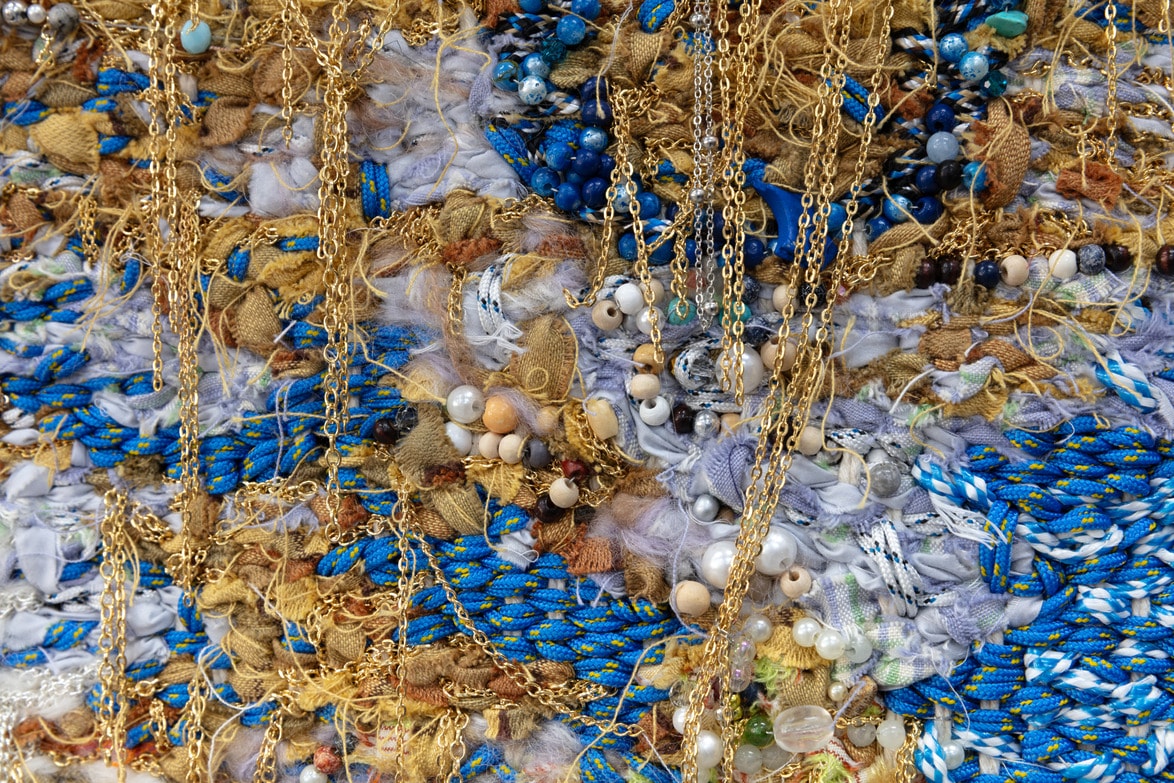
Speaking of memorable stairwells, artist Igshaan Adams created several exquisite wall hangings and sculptures that animate the stairs at the Institute of Contemporary Art Miami, one of the district’s architectural landmarks with its striking glass-and-steel building by Aranguren & Gallegos. During the art week, the ICA debuted a standout group of diverse exhibitions, highlighted by posthumous surveys of the works of the dynamic sculptor Richard Hunt and the Pop-expressionist painter Joyce Pensato.
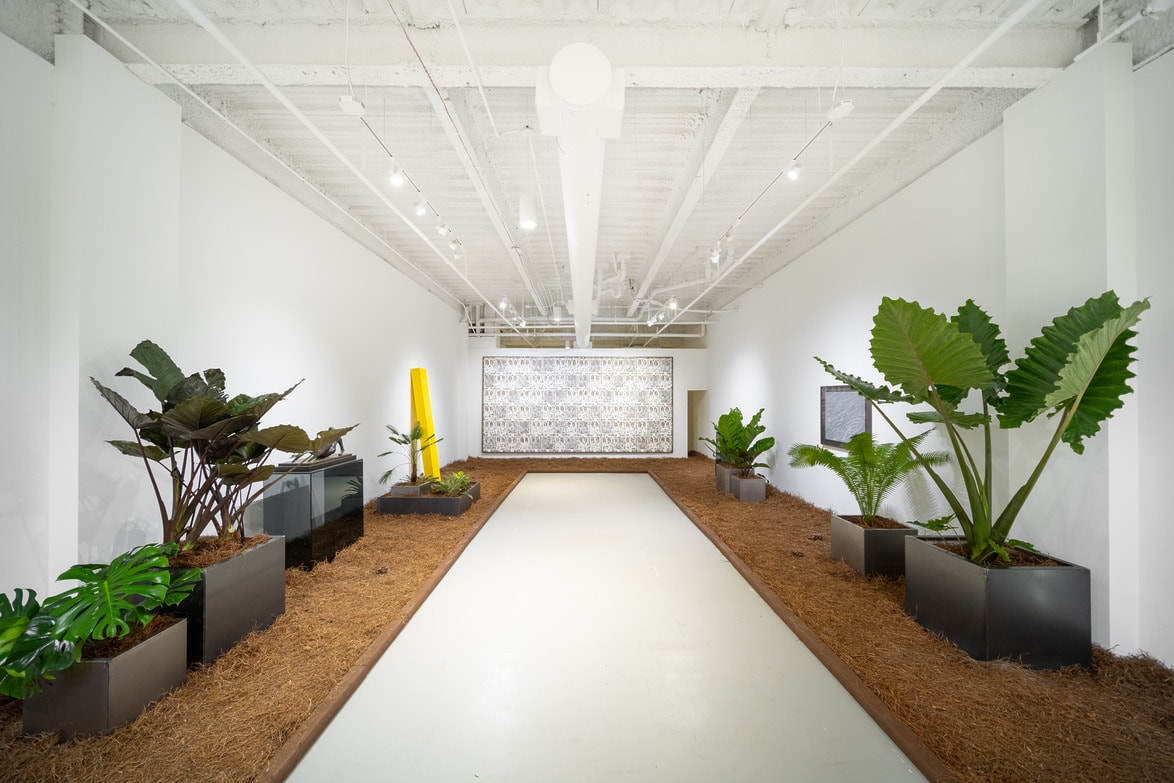
Down the block, Los Angeles gallerist Jeffrey Deitch, who has been organizing pop-up shows here from the earliest days of Art Basel, has collaborated with American Art Projects on a lively presentation of emerging artists, many from the West Coast, that will remain on view through early next year. Nearby, artist Rashid Johnson has curated a monthlong single-room installation that pairs one of his large paintings with lush plants and a handful of works from the Berkowitz Contemporary Foundation, alluding to the organization’s Longleaf Art Park now under construction in the Florida Panhandle.
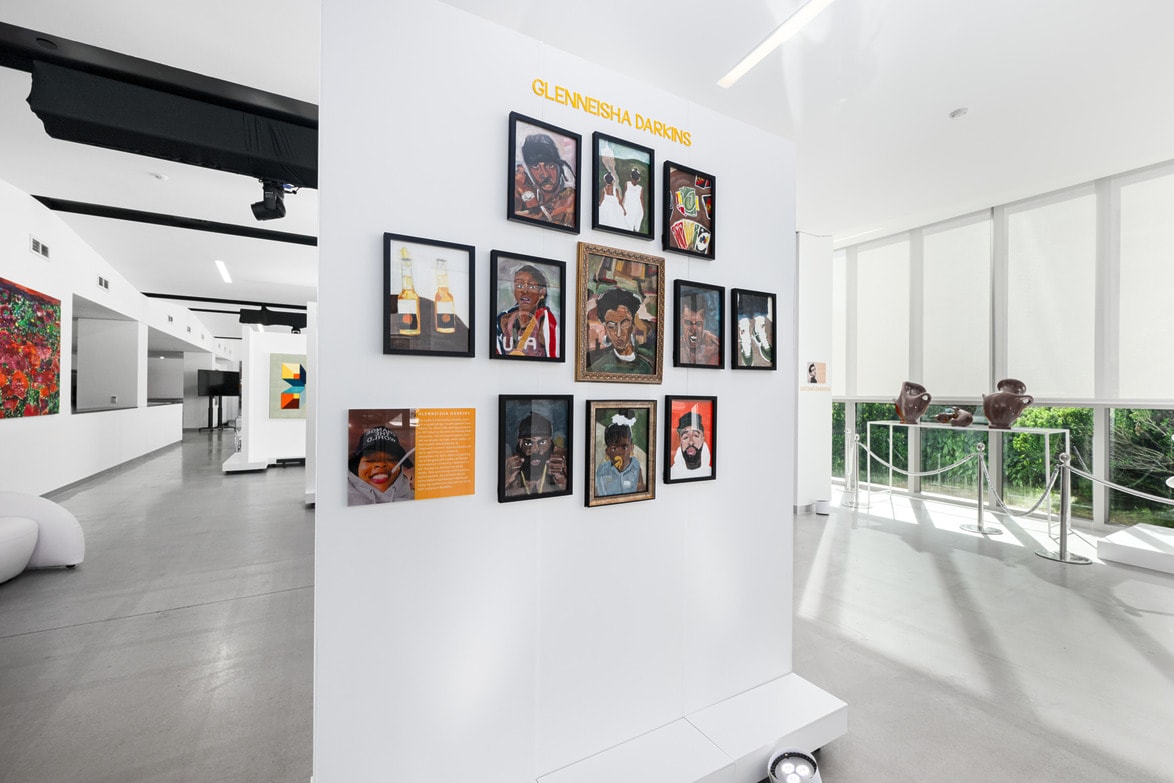
Among the notable shows that ran only for the duration of the fairs, LVMH—which is an investment and sustainability partner in the Design District—staged its fifth pop-up exhibition, dubbed the Studio Miami, featuring several artists with wide-ranging backgrounds and creative approaches. The Open Invitational fair returned for a second year, and its scrappy presentations by nonprofit studio programs showcasing the work of artists with disabilities served as a refreshing counterpoint to the slick, blue-chip aesthetic of Art Basel.
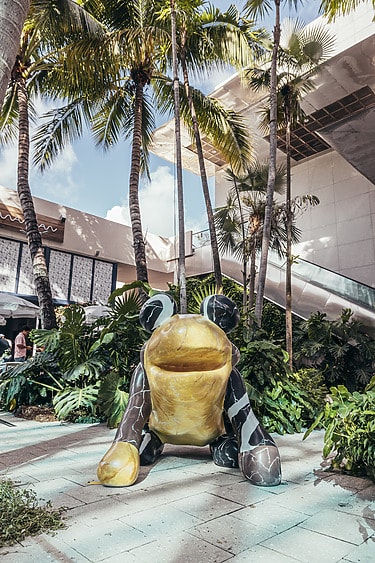
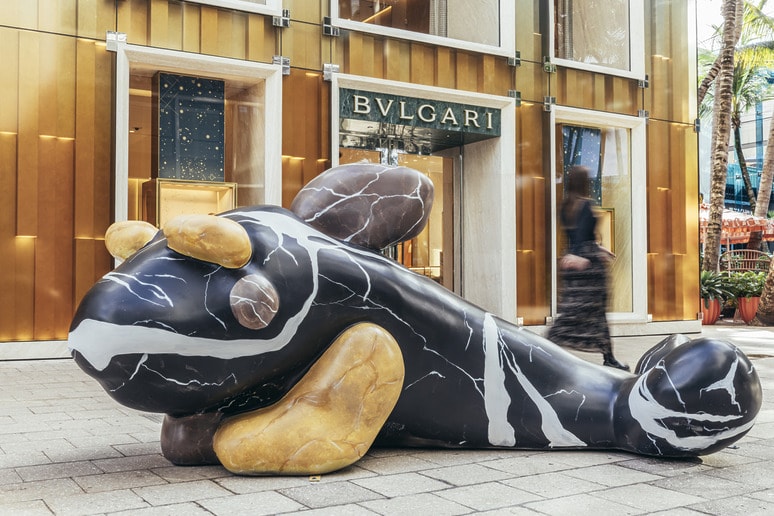
Outdoors, the neighborhood is dotted with art and design pieces—a sculptural steel-and-colored glass shade canopy by Ronan and Erwan Bouroullec here, a Samuel Ross industrial-chic bench or a vibrant playground-like climbing structure by Dozie Kanu there. Adding to the mix each December is the Design District’s annual design commission, overseen by Robins and his team. This year’s commission went to Galerie Creative Mind artist Katie Stout, whose project, titled Gargantua’s Thumb, is an amusing, spirited bestiary of oversized animal sculptures scattered across a central alleyway.
During a tour with the artist, she explained how she modeled the figures in clay, “working quickly and intuitively,” then had them produced in fiberglass at many times the scale. The cartoonish animals—there’s a dog, a crab, a whale, and a frog—are rendered in gold, brown, and black, with white veining painted on afterward to suggest marble. Stout, who notes that she likes “to play with concepts of kitsch,” conceived the works partly as a “comment on luxury,” set amid Dior, Cartier, Hermès, and Loro Piana boutiques.
Stout’s project is the tenth in the series, but it is actually part of a longer history of commissions Robins has been spearheading since 2005, when he invited Zaha Hadid to create the iconic Elastika installation that crisscrosses the atrium of the historic Moore building. That was back when the space played host to the very first edition of Design Miami with just a dozen galleries, and the district lured visitors with its “Art Loves Design” block party events.
These days, the Design District is a prime destination, complemented by related developments in the Wynwood area just to the south and, more recently, Little Haiti to the north, where The Future Perfect unveiled its latest outpost in a historic 1920s villa that once served as the Cuban consulate. And while there may be naysayers who question whether it’s all sustainable, the Design District’s expansion continues. Planned mixed-use developments by Kengo Kuma and Pritzker-winner David Chipperfield will add new architectural landmarks to the neighborhood’s northern and western boundaries, with more shops, restaurants, a hotel, and residences.
“Art Basel is a catalyst that gives us international visibility and allows people to discover the neighborhood in its highest expression,” says Robins. “But the long-term success is driven by consistency, quality, and the idea that the district belongs to the local community—365 days a year.”