
Meet the Decorative Painter Transforming Rooms and Furniture with Spectacular Techniques
Bay Area artist Caroline Lizarraga creates staggering environments for private residences, restaurants, and even the most recent Art Basel fair

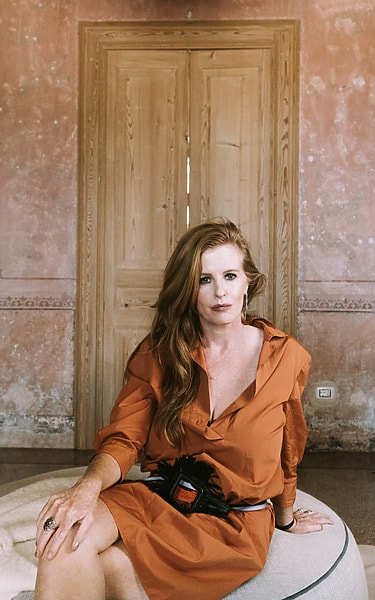
Decorative artist Caroline Lizarraga uses centuries-old techniques to transform walls into deeply personal, one-of-a-kind works of art for clients around the world. From private residences and restaurants to collaborations with leading designers, her creations are guided by a commitment to exquisite craft, narrative, and a very hands-on process.
Lizarraga grew up in California’s rural San Geronimo Valley, the daughter of parents who swapped a tight Brooklyn apartment for acres of land, a creek, and seemingly endless room to roam. “We were never in the house; we were outside building and exploring. It was a very magical setting to be a child,” she recalls.
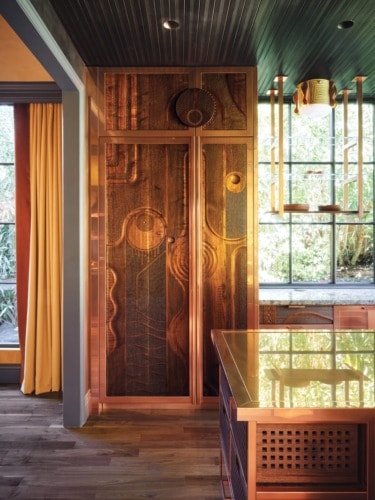
A competitive rhythmic gymnast from an early age, the now mother-of-two would not just design her own routines but the accompanying music and outfits as well. While a high school student she took classes at the Fashion Institute of Design and Merchandising (FIDM) in San Francisco, then continued there through college, eventually graduating as valedictorian. Afterwards, she dabbled in the fashion field, but quickly realized her creative talents were leading her down another path. “I had a passion on the side, which was buying really cheap furniture and fixing it up, turning it into a masterpiece.” Her mother helped her find a year-long program in Florence, Italy, where she learned furniture restoration.
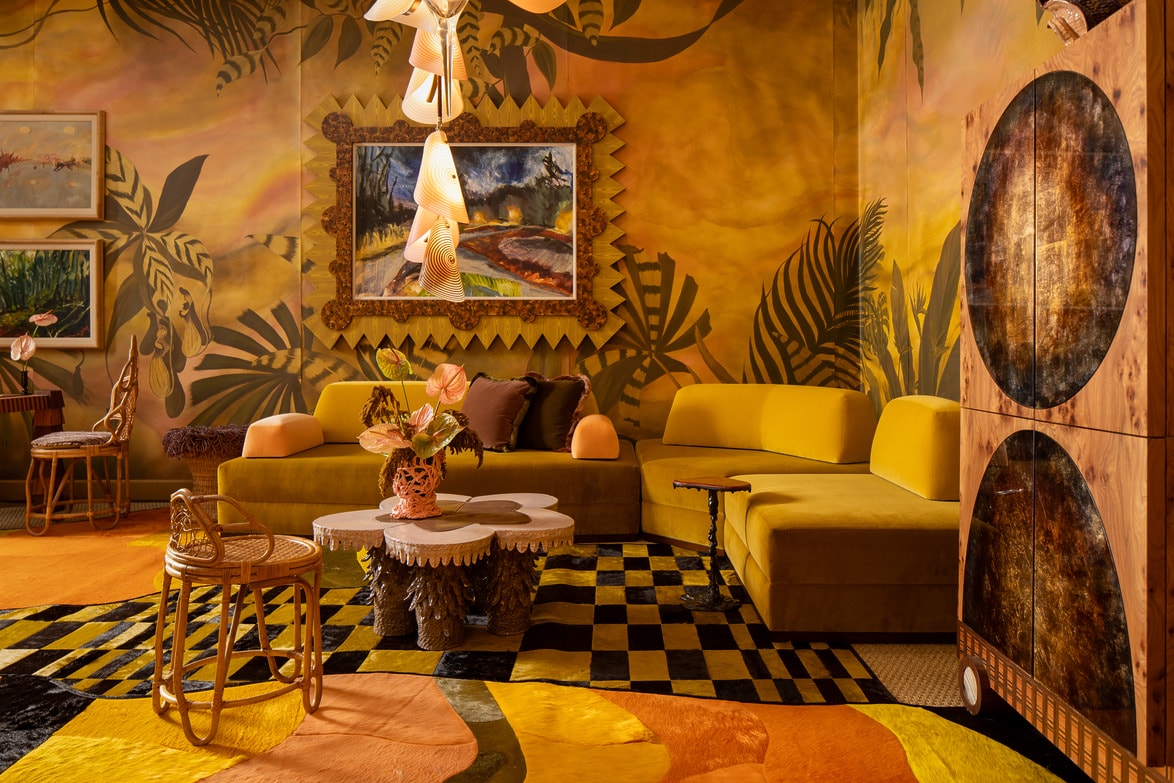
Back in San Francisco, a client at the upscale fashion boutique where Lizarraga worked pointed her toward a Mission District studio run by decorative painter Gail Laurence, a protégé of New York legend Isabel O’Neil. “I went to the studio and honestly felt like that moment in the movies where the ray of light hits your head.” She apprenticed there for two years, learning a variety of painting techniques that mimic the look of horn, marble, chinoiserie, malachite, Lacca Povera, and more before starting her own business.
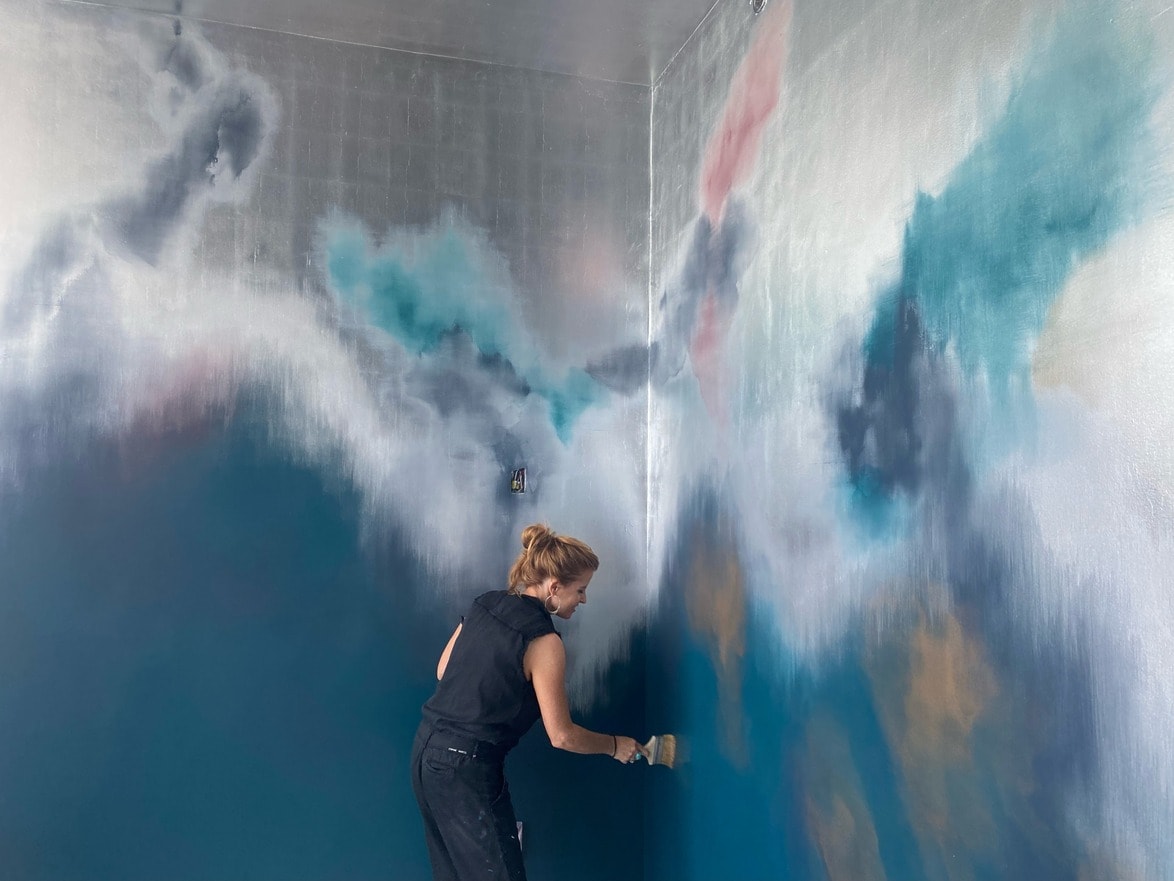
That was twenty-five years ago. Today Lizarraga is still based in the Bay Area and describes her work as “bringing fine art to the wall.” She keeps her core team intentionally small, and is personally on every job site, creating each layer of glorious color and meticulous detail by hand. Helping clients “tell their story” begins with long conversations about their histories, obsessions, and even grief, all of which subtly inform the work. She has buried hand-written intentions directly onto the substrate before adding any visible layers, and created a silver-leaf cloudscape developed from photographs taken by a client and his late partner, transforming the walls into a quiet memorial.
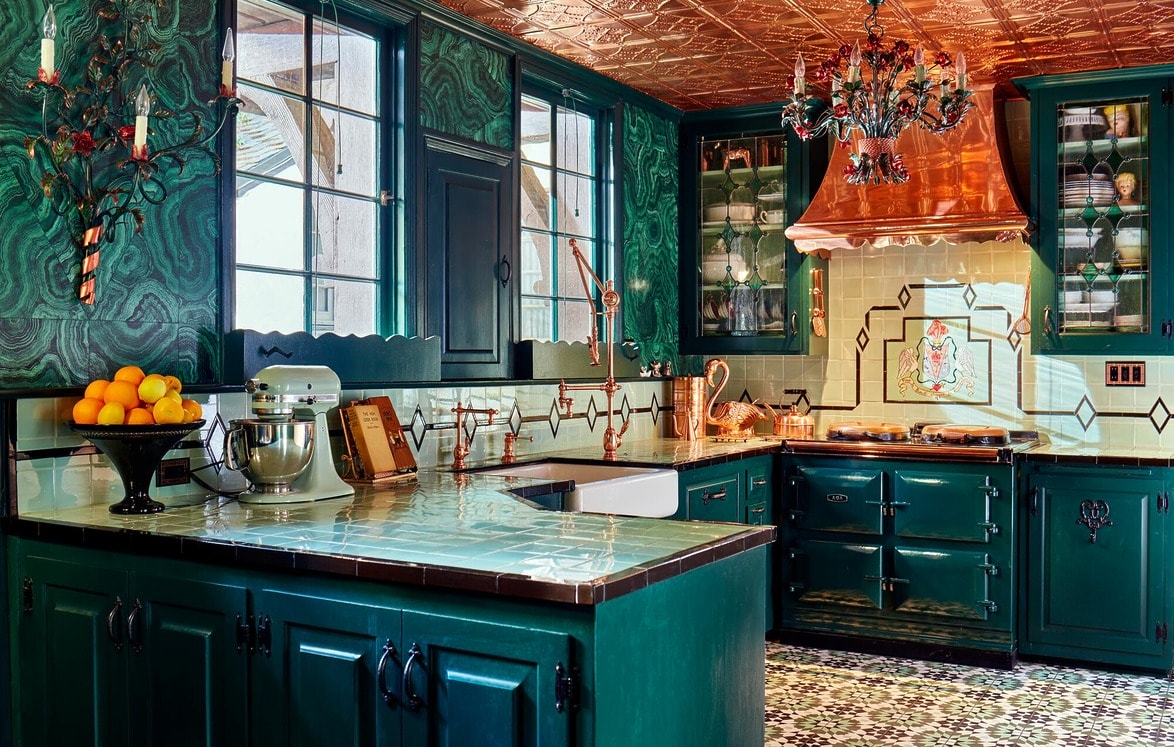
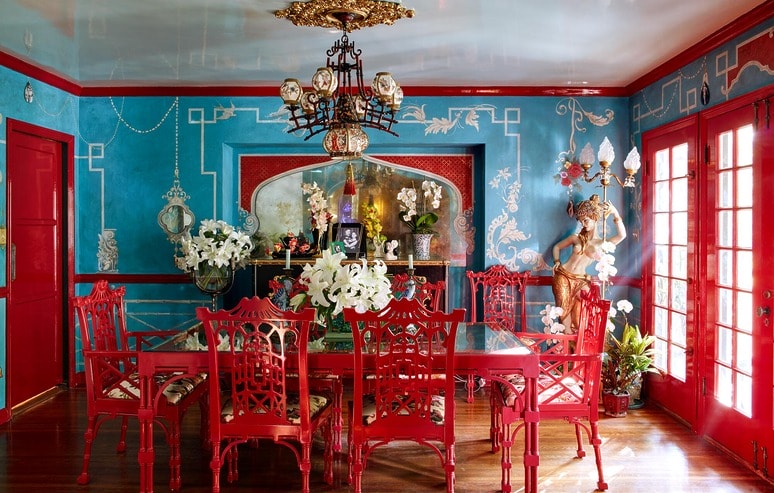
Standout projects include the Los Angeles home of burlesque star Dita Von Teese, whose maximalist tendencies, Lizarraga admits, “feed my soul.” She spent two years creating incredibly intricate surfaces, including an opulent dining room with lacquered ceilings, grisaille walls, and inlaid glass “jewels” embedded with vintage burlesque imagery. The kitchen is clad in brilliant green malachite walls, and a staircase’s painted lace walls are interspersed with likenesses of Von Teese’s favorite pieces of Cartier jewelry.
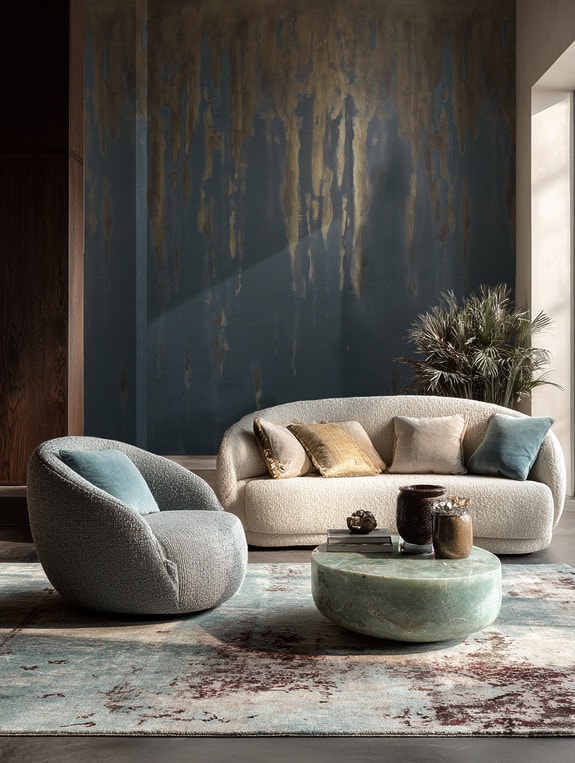
An Anthony George-designed residence in Hudson Yards showcases her incredible range, from creative use of églomisé to her signature crocodile wall textures; and she recently completed a 3,000-square-foot glass ceiling painted as an underground forest canopy for a Ken Fulk project in Jackson Hole. Two years ago she made her designs more accessible by launching a wallpaper line with Parete.
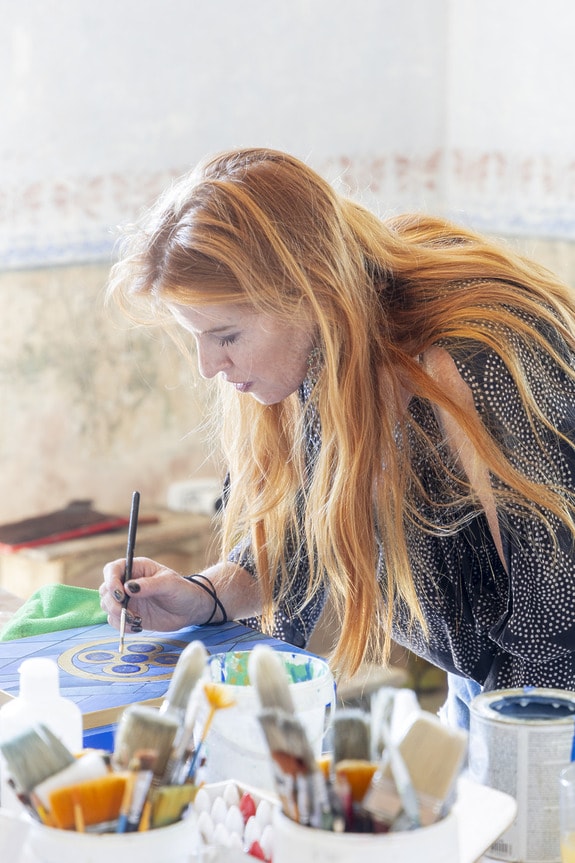
On top of all her decorative painting projects, Lizarraga also oversees Curiosare, a luxury retreat she co-founded with her husband in Puglia that blends daily painting sessions with cooking classes, studio visits, and excursions to local artisans. She is also restoring a 17th-century property there, where master craftspeople will host workshops for those who want to immerse themselves in old-world techniques. It is both her escape from her life spent on scaffolding and an extension of her belief that, in an increasingly digital world, there is still nothing more powerful than a story created with one’s hands.