
“Gainsborough: The Fashion of Portraiture” Goes on View At The Frick Collection
A riveting exhibition explores how the artist intertwined fashion with social, economic, and geographical status
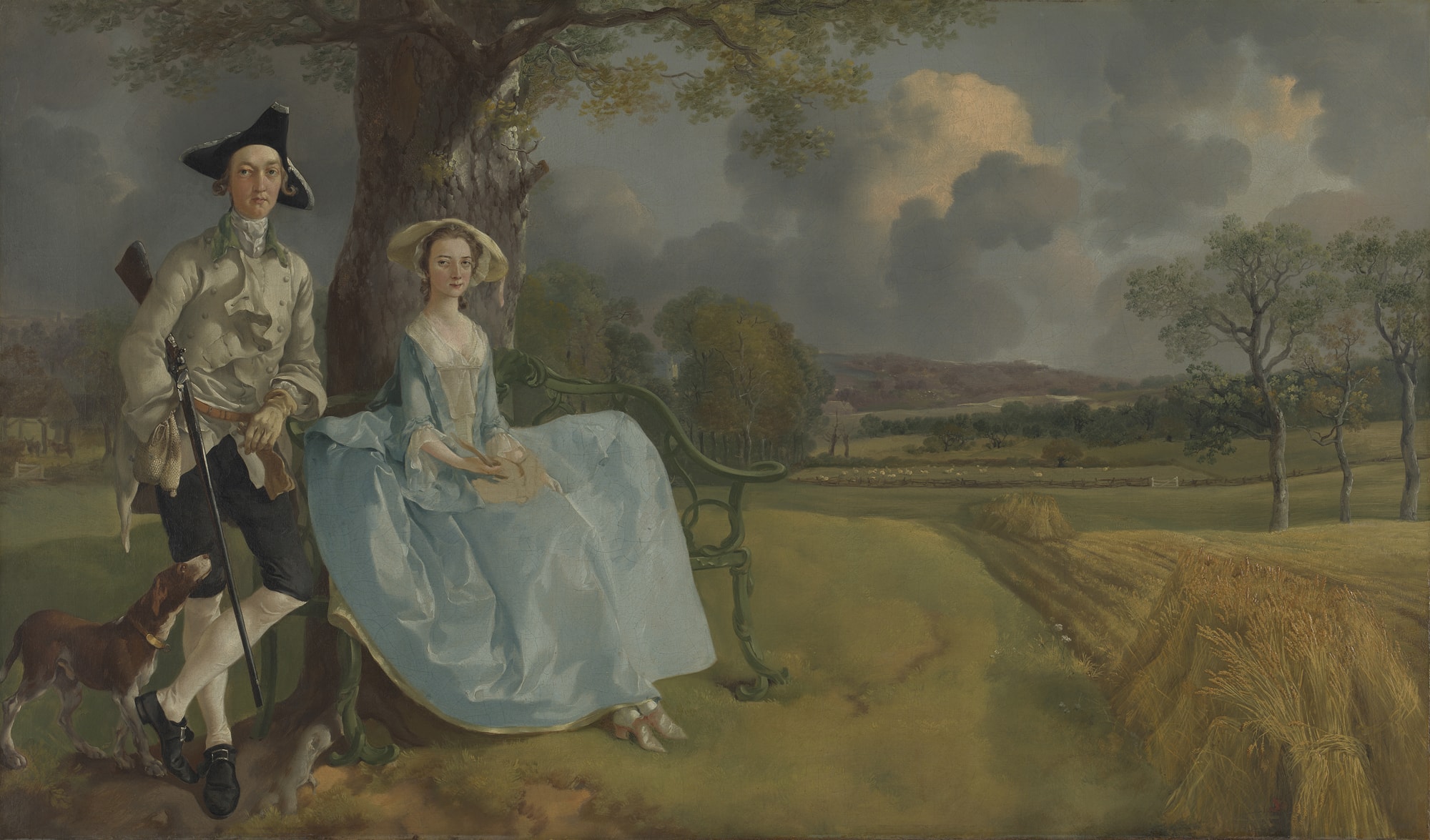
When, in 1759, a plucky Thomas Gainsborough established his studio and viewing room smack dab next to the Pump Room in Bath, he wasn’t just announcing his services to the high society gathered there to take the waters, gossip, and mull news concerning King George. He was positioning himself to observe, absorb, and incorporate into his art the era’s evolving idea of personhood as a matter of fashion.
Extending far beyond mere attire, the term blended the social, economic, and geographical, creating a broader palette that Gainsborough helped make inextricable from the practice of portrait painting itself. That fruitful process goes on display at The Frick Collection in “Gainsborough: The Fashion of Portraiture,” on view February 12 through May 25.


Organized by chief curator Aimee Ng, it is the Frick’s first show devoted to Gainsborough, and its focus on his portraiture is a first for New York. “Fashion’s much more expansive meaning in that period had everything to do with class,” says Ng. “A ‘person of fashion’ referred to a very, very distinct rank, right under the nobility, and above the so-called vulgar class.” In a show of more than two dozen paintings, the force and fluctuations of the gentility Gainsborough applied his paints to are constantly at play.


Henry Clay Frick’s prized 1776 portrait of The Honorable Frances Duncombe, resplendent in blue satin, leaves its usual spot near the museum’s entrance for the newly opened Ronald S. Lauder Galleries and the company of such other aristocratic subjects as Sarah Hodges, Later Lady Innes; Mary, Countess Howe; or grandest of all, Bernard Howard, 12th Duke of Norfolk of 1788, on loan from Arundel Castle—admiringly emulated in the striving upward of the time. The Duncombe portrait has also occasioned a new volume, co-authored by Ng and designer Isaac Mizrahi, in the Frick’s Diptych series.


In carefully conveyed contrast are two portraits of Grace Dalrymple Elliott, whose numerous extra-marital affairs, including with the Prince of Wales, made scandal her calling card. In a full-length 1778 canvas, a first-time loan from The Met, she is, at 24 and the rumored mistress of George, 4th Earl of Cholmondeley, still a relatively regal figure, dressed in gold, coiffed in the height of fashion, and at home in the architectural respectability of classicized surroundings. The Frick’s likeness of 1782, an intimate closeup that ignited tut-tutting from critics and social wags—Alexander Pope had gone on the record early on—traces the world-weary smile of a courtesan above scantily covered shoulders.


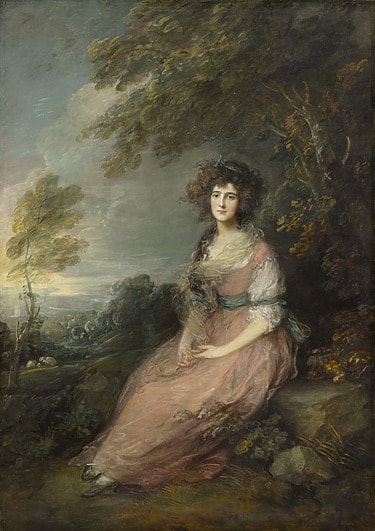
In Ng’s framework, Gainsborough’s portraiture further existed at the nexus of manufacturing, trade, and craft, in a commonality of materials like canvas and pigment’s transformative capabilities. By 1774, the artist had relocated to London, patronized by the titled and portraitist to the crown; he still discerned fashion and upward mobility as a potent mix. His self-assured portrait of James Christie is accessorized in allusions to the thriving auction house he founded. Elizabeth Linley Sheridan, a celebrated beauty and singer allowed to perform only in the most exclusive circles once she married the famous playwright, is pensive in stylish pink. The formerly enslaved Ignatius Sancho is shown in gentlemanly attire befitting his renown as a distinguished author and a composer attached to the court of Queen Charlotte.


To Gainsborough, “fashion was a way of showing people as themselves,” Ng says of his innovations in portrait painting. He wanted his subjects seen in an endless present, and stopped time by clothing them in the Van Dyck style regarded as rendering subjects timeless, or by repainting a canvas several years later to reflect changes in the state of reigning style.


Were Gainsborough to paint her, Ng says, she imagines herself “in a Van Dyck dress with a standing dogtooth collar, long, and in black satin” as a fashion statement. Formerly the co-host of the Frick’s 2020-21 video series Cocktails with a Curator, she would gladly welcome him to drinks in his honor with “something on the light side,” she says, “a nice spritz with elderberry flavoring, so the evening could last longer.”
“Gainsborough: Portraiture of Fashion” is on view through May 25.